Paper shopping bags remain one of the most versatile and eco-friendly packaging solutions across retail, food service and luxury industries. In this expert guide, Crown Win uses industry-standard die-cut templates to analyze the anatomy of standard paper shopping bags in detail, explain the function of each component, and share professional design insights to help your brand create durable, cost-effective and aesthetically pleasing custom paper bags.
Understanding the Structure of Standard Paper Shopping Bags
The classic paper shopping bag features a simple yet ingenious folding design that transforms a single sheet of paper into a sturdy, functional container. Below is a detailed breakdown of every structural component found in a standard die-cut template:
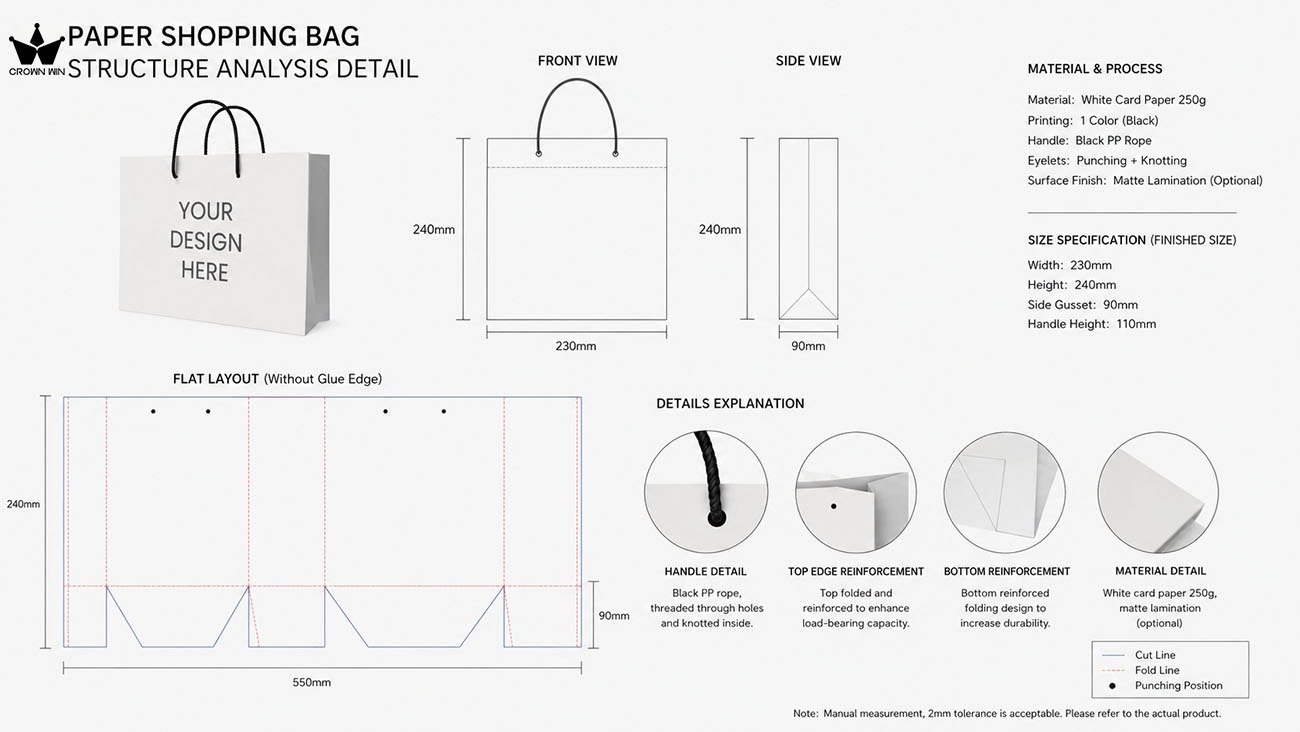
1. Main Body Panels
Front Panel: The primary brand display surface, ideal for showcasing your logo, brand identity, patterns and key marketing messages.
Back Panel: Identical in size to the front panel, perfect for displaying secondary brand information, product details, care instructions or contact information.
Side Accordion Gussets: The folded sections on both sides that allow the bag to expand and accommodate products of varying thicknesses. Proper gusset sizing is critical to ensure the bag can withstand its intended weight without tearing at the seams.
2. Bottom Construction
Bottom Flaps: Four interlocking flaps that form the base of the bag. When properly glued and folded, they create a flat, stable bottom that evenly distributes weight across the entire base.
Reinforced Bottom: For heavier items, an additional cardboard insert can be added to the bottom to significantly increase load-bearing capacity and prevent sagging.
3. Top Reinforcement
Top Edge Hem: A folded strip along the top opening that increases the bag's rigidity and prevents tearing when handles are attached or when the bag is carried.
Handle Holes: Pre-drilled openings for inserting handles. The precise placement and reinforcement of these holes directly impact the overall load capacity and durability of the bag.
4. Handle Options
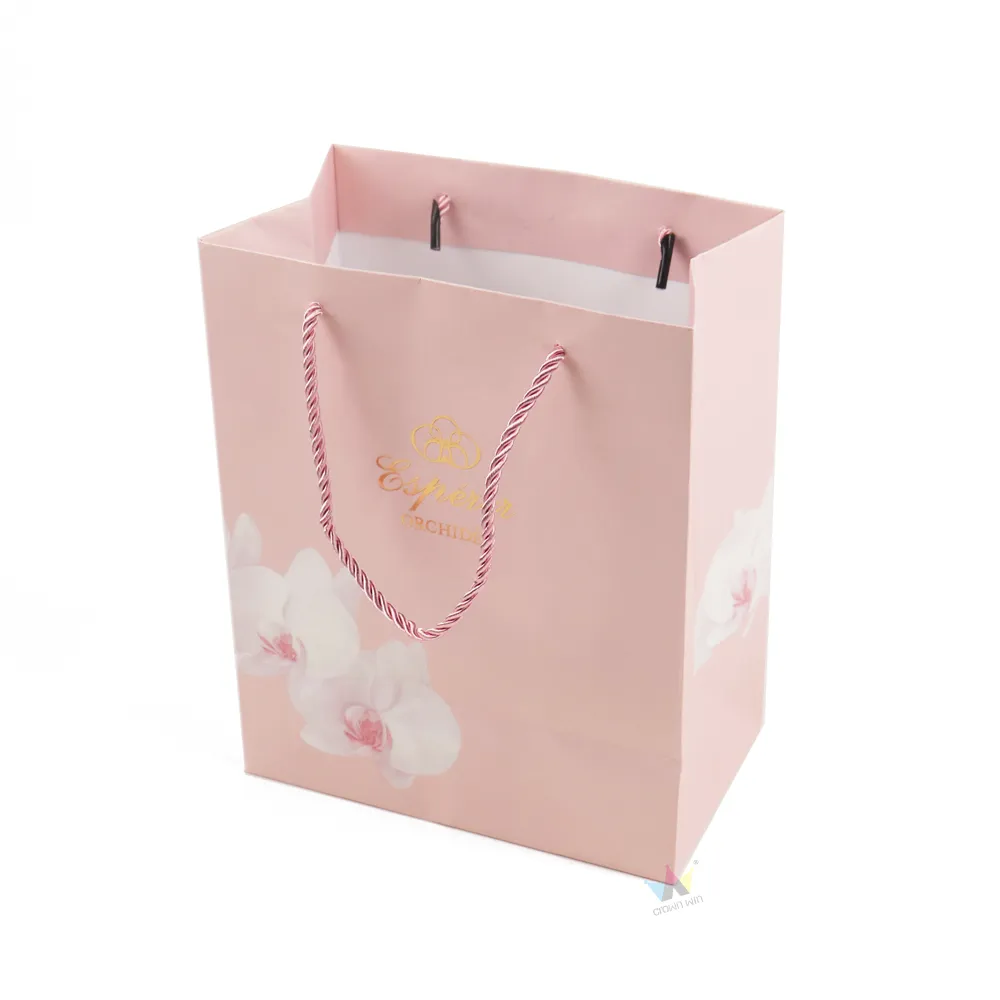
Twisted Paper Handle: The most common and versatile option, made from twisted kraft paper. It offers excellent durability, a comfortable grip and is fully recyclable.
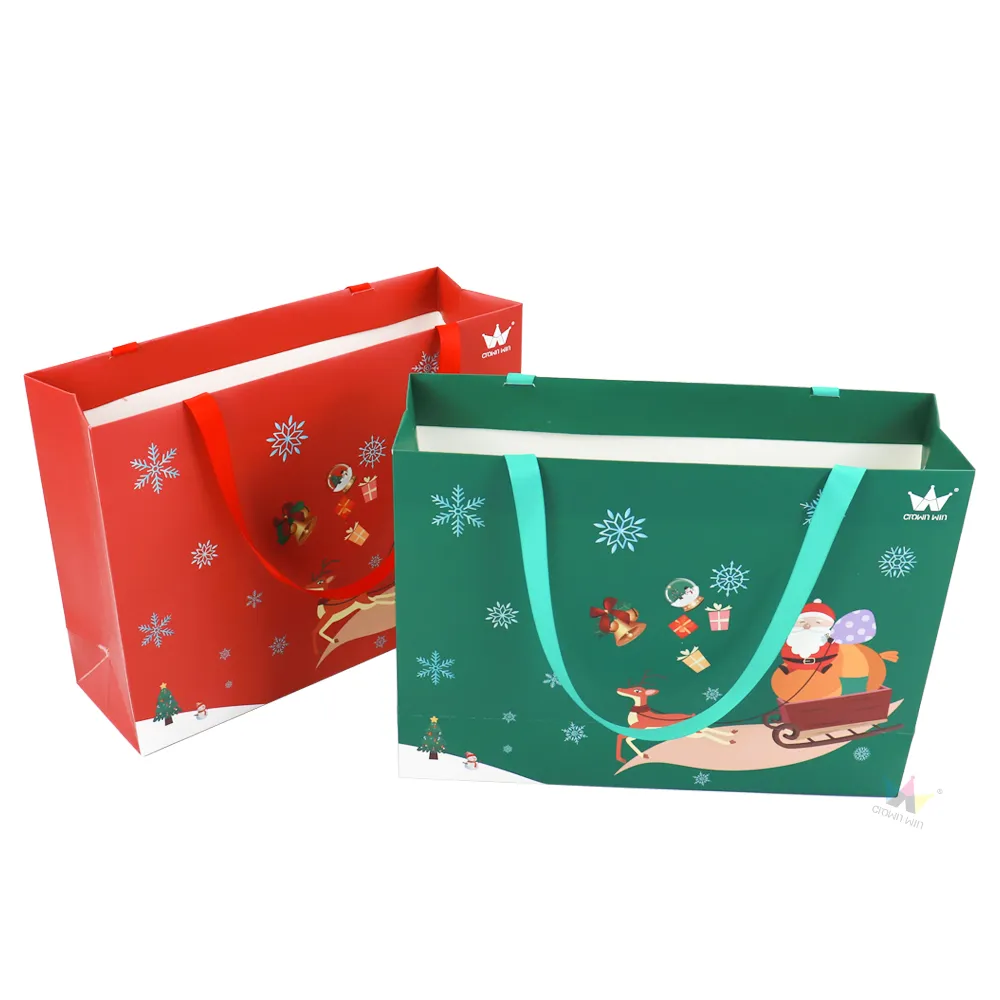
Flat Paper Handle: A flat paper strip directly attached to the bag. It is the most cost-effective option but has lower load-bearing capacity.
Cotton Rope Handle: Provides a premium feel and superior strength, ideal for medium to heavy-weight items.
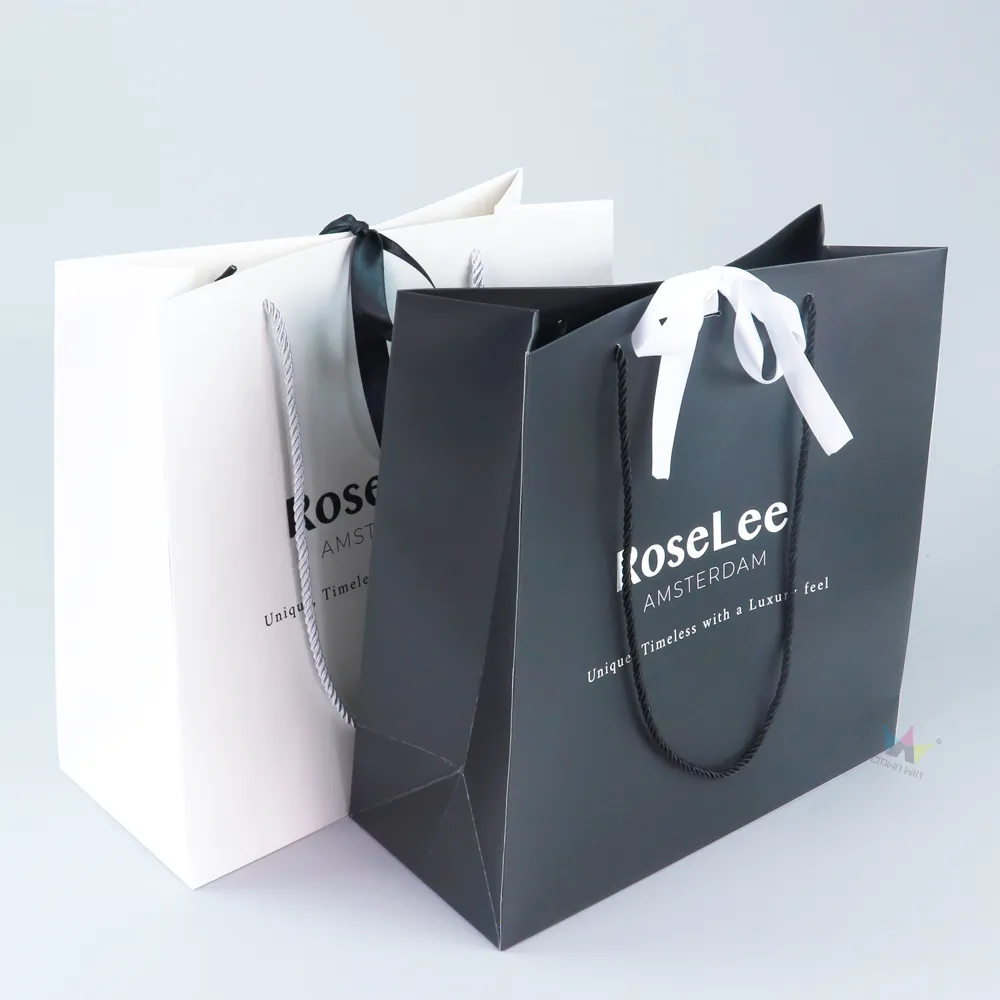
Ribbon Handle: Used for luxury and high-end packaging, creating an elegant, sophisticated texture that elevates the unboxing experience.
Detailed Explanation of Standard Die-Cut Templates
The die-cut template referenced in the image represents the industry-standard flat layout of a paper shopping bag before folding and assembly. Here is a clear interpretation of the different lines and markings:
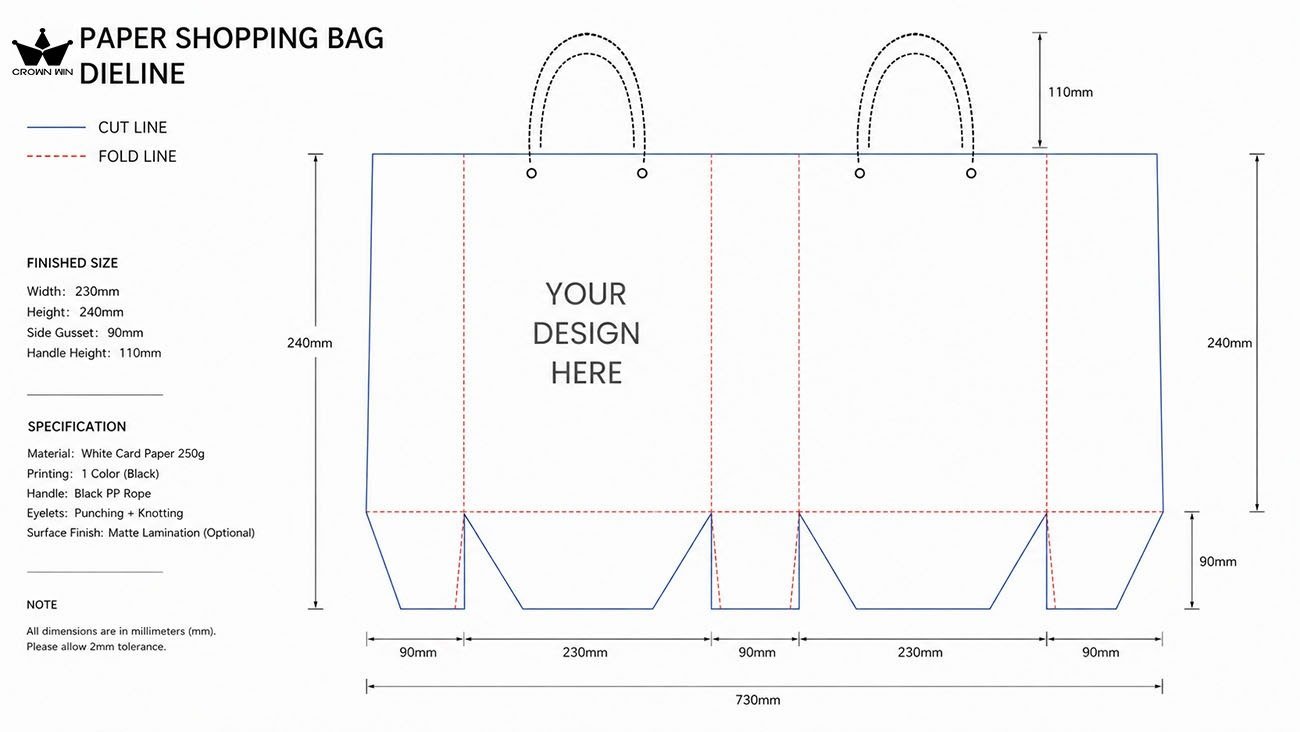
Red Lines: Folding lines. These indicate where the paper will be creased during the production process to form the bag's shape.
Blue Lines: Cutting lines. These indicate where the paper will be precisely cut to its final shape.
Grid Pattern: Ensures perfect alignment of all components during the die-cutting process, guaranteeing consistent quality across every bag.
When assembled, this template produces paper bags with equal front and back panels, symmetrical side gussets, a flat bottom and the ability to stand independently. This proven design is highly efficient for mass production and minimizes material waste to the greatest extent possible.
Key Design Considerations for Custom Paper Shopping Bags
1. Material Selection
Kraft Paper: Durable, eco-friendly and cost-effective, available in natural brown or white options. Ideal for everyday retail use.
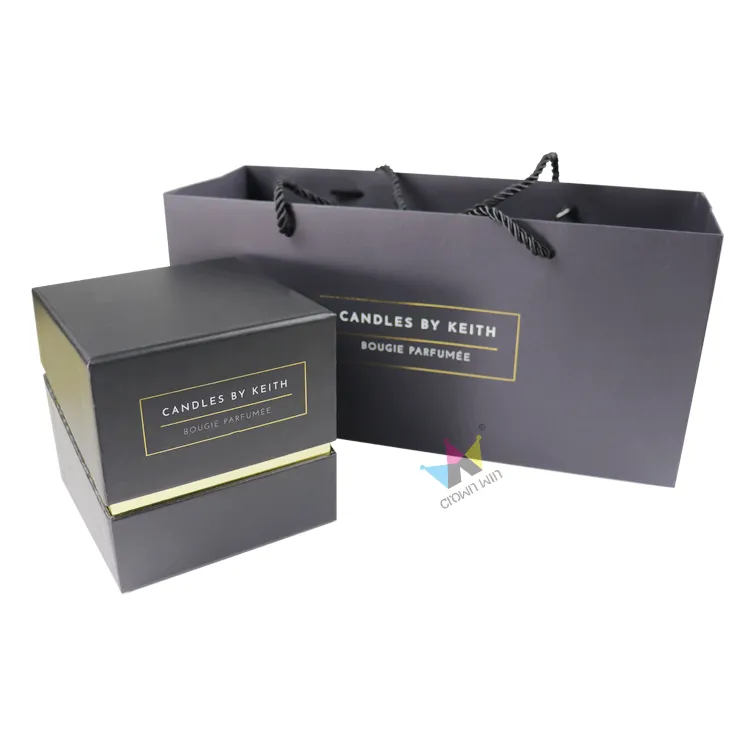
Coated Paper: Features a smooth, glossy surface that provides exceptional print quality. Perfect for luxury retail brands and high-end products.
Recycled Paper: Appeals to environmentally conscious consumers and supports sustainable business practices. Available in various weights and finishes.
FSC-Certified Paper: Sourced from responsibly managed forests, demonstrating your brand's commitment to environmental stewardship.
2. Size and Proportions
Standard sizes range from small gift bags (8" × 4" × 10") to large shopping bags (16" × 6" × 12")
The height-to-width ratio should be balanced to ensure the bag remains stable when filled
Always specify bag dimensions based on your actual product size, including extra space for packaging materials
3. Load-Bearing Capacity
A standard 150gsm kraft paper bag can safely carry approximately 5-8 pounds
For heavier items, use thicker paper (200-250gsm) and add reinforced handles and bottom inserts
Always test your bag design with actual product weights before full-scale production
4. Printing and Finishing
Offset Printing: Ideal for large quantities and complex designs with multiple colors
Digital Printing: Offers faster turnaround times for small batch orders and variable data printing
Finishing Options: Include matte or glossy lamination, spot UV, hot stamping and embossing to enhance your brand's visual impact and add texture
Frequently Asked Questions (FAQ)
Q1: What is the minimum order quantity for custom paper shopping bags?
A: At Crown Win Box Manufacturer, the standard minimum order quantity for custom printed paper bags is 500 pieces. For special projects, we can accommodate smaller orders, though the unit price will be higher due to setup costs.
Q2: How long does it take to produce custom paper bags?
A: Standard production time is 10-15 working days after design approval. For urgent orders, we can expedite production to shorter timelines for an additional fee.
Q3: Can you print on all sides of the bag?
A: Yes, we offer full-color printing on the front, back and both side gussets. We can also print on the inside of the bag for an extra special touch.
Q4: Are your paper bags recyclable and biodegradable?
A: Absolutely. All of our paper bags are made from 100% recyclable and biodegradable materials. For brands committed to sustainable forestry practices, we also offer FSC (Forest Stewardship Council) certified paper options.
Q5: What is the difference between a gusseted bag and a flat bag?
A: Gusseted paper bags have folding side panels that expand outward, making them ideal for holding bulkier items. Flat bags do not have side gussets and have a relatively flat profile, making them perfect for lightweight items such as documents, clothing or small gifts.
Q6: Can you customize the handles for my paper bags?
A: Of course. We offer a wide range of handle options including twisted paper handles, cotton ropes, satin ribbons and die-cut paper handles. We can also match handle colors to your brand's specific color palette.
Q7: Do you offer eco-friendly finishing options?
A: Yes, we provide several sustainable finishing alternatives including water-based inks, biodegradable lamination and compostable coatings that maintain the bag's recyclability.
Conclusion
A thorough understanding of paper shopping bag structure is essential for creating packaging that balances practical functionality with visual appeal. The standard die-cut template provides a proven, reliable foundation that you can customize to perfectly match your brand identity and product requirements.
As a professional packaging manufacturer with over ten years of experience, Crown Win is dedicated to designing and producing high-quality custom paper packaging for global customers. Our team of structural engineers and graphic designers will work closely with you to create exquisite paper bags that not only protect your products but also effectively enhance your brand image.
Whether you need simple kraft paper bags for daily retail use or luxurious laminated paper bags designed specifically for high-end retail environments, we deliver exceptional results through our professional expertise and advanced production capabilities. Contact us today to discuss your custom packaging project requirements and receive a free, no-obligation quotation.