Choosing the right insert when designing custom product packaging is a challenge many brands face. An ideal insert must not only securely hold the product in place but also avoid negatively impacting shipping costs or sustainability goals.
The two most popular options today are paper inserts and EVA foam inserts. While both offer excellent protection, they are suited to vastly different scenarios, budgets, and brand positionings. In this article, Crown Win analyzes their respective pros and cons, practical applications, and performance to help you determine which solution best fits your product line.
Paper Inserts
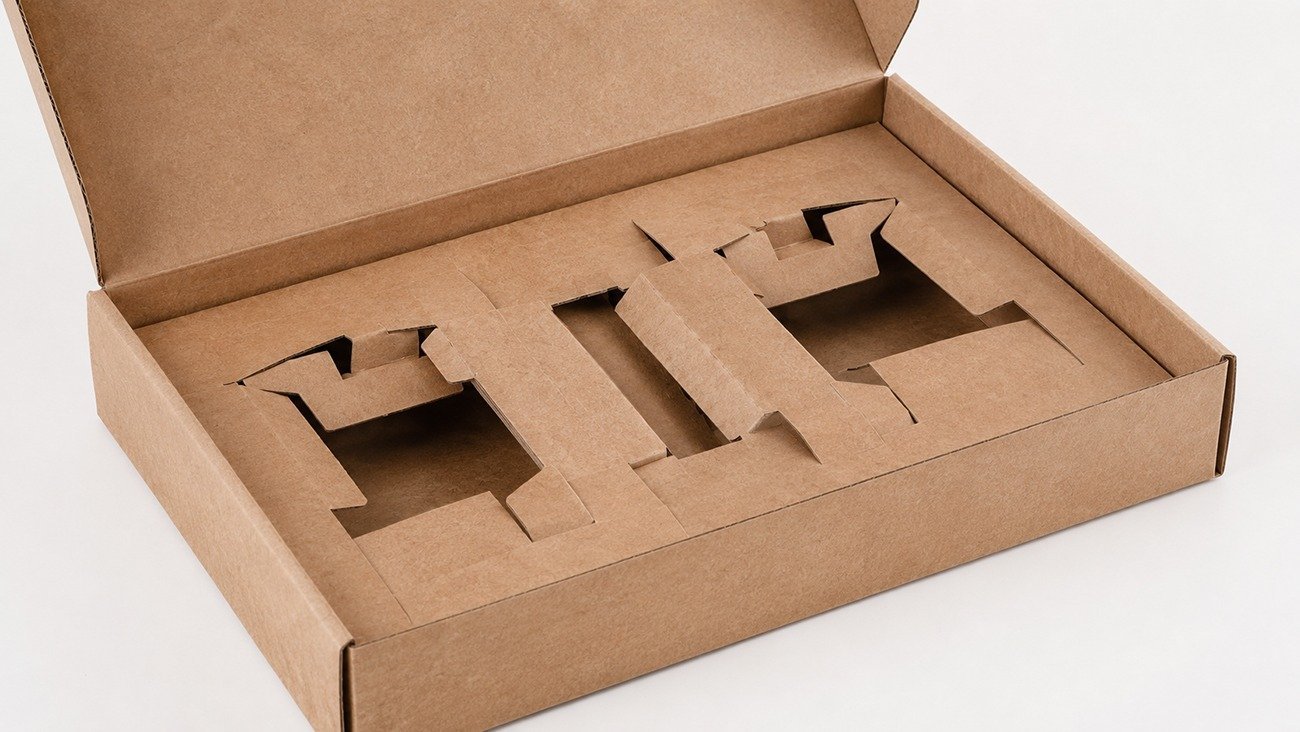
Paper inserts—including categories such as paperboard trays, folding paper holders, and molded pulp trays—are primarily made from recycled paperboard, kraft paper, or molded pulp fibers. Thanks to their eco-friendly and recyclable nature, they have become the go-to choice for many brands that prioritize sustainability and minimalism.
Key Advantages
Eco-friendly and Recyclable: Fully recyclable and biodegradable, meeting modern consumer demand for plastic-free packaging.
Low Cost: Lightweight materials significantly reduce shipping costs, making them an attractive option for e-commerce brands.
Supports Branding: Easy to print with logos, patterns, or instructional graphics.
Short Production Cycle: The tooling required for die-cutting and folding structures is simpler than that needed for foam materials.
Limitations
Lower Shock Absorption: Not suitable for heavy, fragile, or high-value items requiring deep cushioning protection.
Limited Shape Customization: Cannot achieve the intricate cutouts and recesses possible with foam materials.
Moisture Sensitivity: Paper materials may lose some structural integrity when exposed to water or high-humidity environments.
Suitable Applications: Cosmetics, skincare products, electronic accessories, apparel boxes, food packaging, and brands with a sustainability-focused philosophy.
EVA Foam Inserts
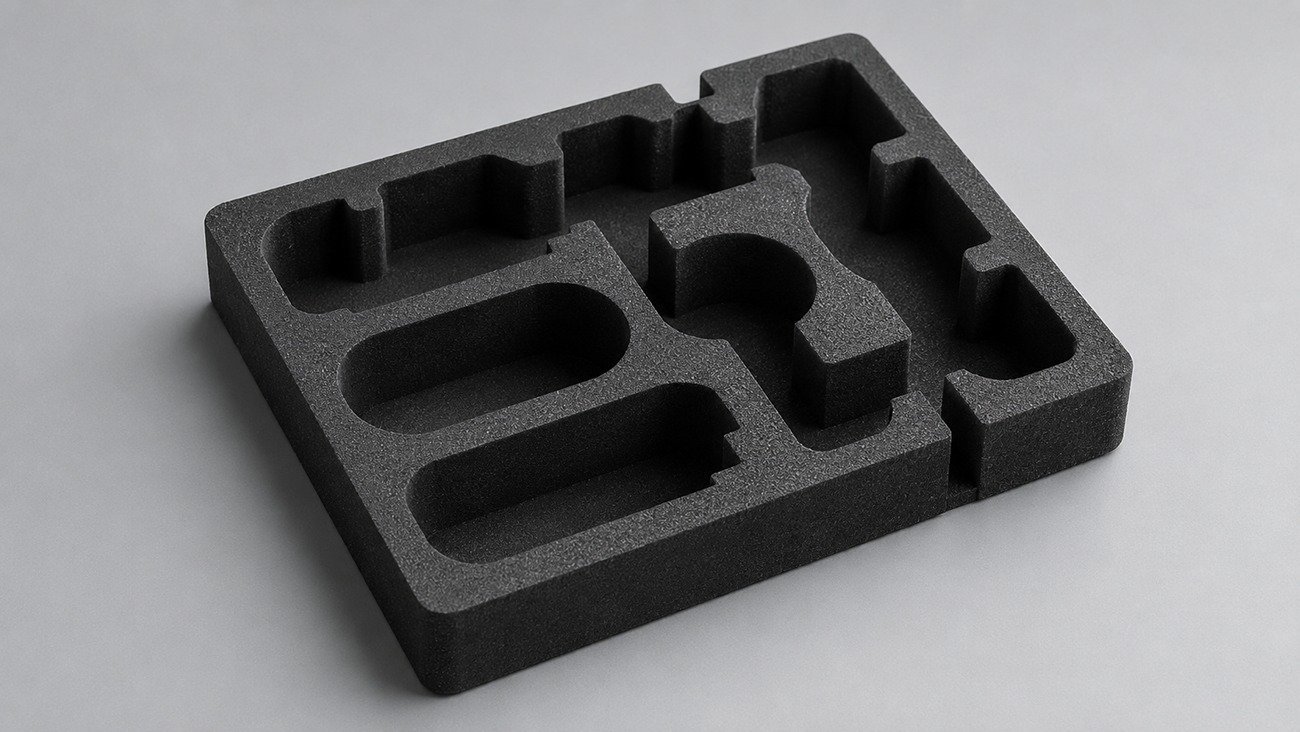
EVA (Ethylene-Vinyl Acetate copolymer) foam inserts are soft, resilient, and fully customizable. Typically precision-cut using CNC machinery or molds, they can be tailored with recesses that match the product's shape exactly, ensuring a perfect fit for every contour.
Key Advantages
Shock Absorption: Absorbs high-intensity vibrations and impacts more effectively than paper-based tray materials; ideal for protecting fragile or high-value items.
High Customizability: Conforms perfectly to irregular shapes and accommodates a wide range of products and accessories.
Water and Chemical Resistance: Features a non-absorbent surface that maintains performance even in humid environments.
Limitations
Higher Cost: EVA foam is more expensive than cardboard.
Lower Environmental Friendliness: Standard EVA is a plastic-based material with low recyclability rates.
Longer Tooling Lead Times: Custom CNC foam cutting requires specialized tooling and setup.
Typical Applications: Instrument cases, electronic accessories, gift boxes, hardware tools, medical devices, and protective padding for luggage/cases.
Comparison Table
| Factor | Paper Insert | EVA Foam Insert |
|---|---|---|
| Protection Level | Moderate | High |
| Sustainability | Excellent | Moderate |
| Shape Customization | Good | Excellent |
| Unit Cost | Low | Medium-High |
| Weight | Very Light | Heavier |
| Branding Surface | Excellent | Limited |
| Water Resistance | Poor | Good |
Customer Success Story:
A UK-based premium skincare brand was struggling to protect glass serum bottles with their existing paper inserts; the bottles were prone to damage during international shipping, leading to frequent after-sales issues. They turned to Crown Win for a solution.
After testing various options, our engineering team proposed a hybrid solution that retained the paper packaging to align with the brand's eco-friendly values: a rigid paper tray base combined with a precision-cut EVA foam top layer designed to cradle each bottle individually.
Results:
Overall packaging costs increased slightly, but return rates dropped significantly.
Why Choose Crown Win as Your Partner?
As an experienced Chinese paper packaging manufacturer, Crown Win operates a 12,000-square-meter production facility equipped with advanced die-cutting, CNC foam milling, and quality inspection lines. Our capabilities include:
Comprehensive in-house design and structural engineering support
A wide range of material options: kraft paper, coated paperboard, molded pulp, standard EVA, high-density EVA, and recycled foam
Rigorous quality control processes, including three-stage inspections prior to shipment
Low minimum order quantities (MOQs) for startups and scalable production capacity for established brands
We do more than just sell packaging—we design protective packaging solutions that balance performance, cost, and brand image.
The Bottom Line: Which Should You Choose?
If your brand prioritizes sustainability, cost-effectiveness, and high-quality print results—and your products are relatively lightweight and durable—paper inserts are the recommended choice.
If you require superior protection, a precise fit, and a premium feel—and your budget allows for a higher per-unit cost—EVA foam inserts are the recommended choice.
For many brands, the optimal approach is a hybrid design: using paper materials for structural support and brand presentation, while employing EVA foam for targeted cushioning of fragile components.
Not sure which solution is right for your product? Contact Crown Win Packaging today for a free structural design consultation and a quote for samples.